

Image

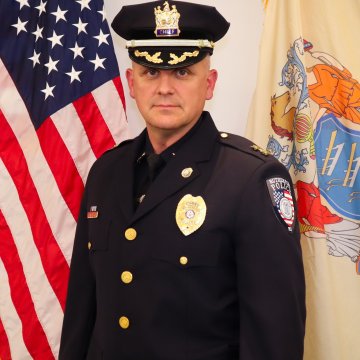
Director, Tennessee Bureau of Investigation & President of the International Association of Chiefs of Police (2026 Participant)
University of Virginia's Master of Public Safety course PSPS 5500: Contemporary Issues in Leadership: Policing in Nazi Germany includes a multi-day experiential learning opportunity for students in Krakow, Poland. Industry professionals who are not UVA students may also participate. Learn more about this transformational experience.
The delegation for Operationalizing “Never Again” brings together a distinguished international group of public safety leaders, law enforcement executives, and policy experts committed to transforming remembrance into action. Rooted in the lessons of history and the enduring moral imperative of “Never Again,” this delegation equips police chiefs, sheriffs, and public safety professionals with the knowledge, context, and practical tools to identify early warning signs of dehumanization, prevent atrocities, and uphold human dignity in their own communities. Through immersive experiences, cross-national dialogue, and a focus on ethical leadership, the delegation embodies a commitment to ensuring that the promise of “Never Again” is not a slogan, but a standard of practice.
The program has garnered profound support:
|
Image

Phyllis Greenberg Heideman, President of the International March of the Living: "The Law Enforcement Delegation is a powerful representation, and testament to the commitment of those serving communities around the world, to ensure these atrocities never occur again." |
Image

Paul Goldenberg, Senior Fellow for Transnational Security at the Rutgers University Miller Center on Policing and Community Resilience: "This is an opportunity for leaders to reflect, learn, and take actionable steps to ensure accountability and ethical leadership in their organizations." |
Image

Marvin Ben Haiman, Executive Director of CPSJ: "This is more than a history lesson; it’s about equipping leaders with the skills to navigate ethical dilemmas and uphold justice in a rapidly changing world. This course and the experience of participating in the International March of the Living is a life-changing experience." |
Image

Paul Miller, "The Miller Center on Policing is proud to support a program that challenges law enforcement leaders to engage with some of history’s most painful lessons and apply them to the responsibilities they carry today. This initiative is not simply about remembrance. It is about leadership, prevention, and ensuring that police leaders are prepared to protect vulnerable communities and uphold the democratic values that hold civil society together." |
|
Image

|
Rutgers University Miller Center on Policing and Community Resilience focuses on improving the relationships between law enforcement and vulnerable communities through education, best practices, and research. Explore the Miller Center's mission. |
|
Image

|
University of Virginia Center for Public Safety and Justice serves as a hub for leadership development, research, and education in public safety, promoting innovation and public service. Learn more about the Center for Public Safety and Justice. |
Click on any of the cards below to hear about the experiences of past attendees, who have represented dozens of countries and consist of executives representing numerous agencies.





Operationalizing Never Again is more than a concept, it is a mandate. I believe police, government leaders, and policy makers all need this exposure to feel the realities of history to assure we never repeat it. The impact of hate in community is real as it diminishes safety by creating fear. For policing to keep communities safe we must be the force to combat all evil regardless of its origin. Especially if it is government sponsored.

I believe remembrance must be paired with responsibility. The march of the living is not only a tribute to those who were lost, but a powerful call to protect the freedoms and human dignity that so many were denied.

We chose this profession to help others, especially the most vulnerable. Over time, the events we experience can harden us. Moments like this remind us who we are at our core: peace officers, called to serve with purpose and to lead with courage.

In April, I had the privilege of participating in the March of the Living in Poland as a sworn law enforcement officer in uniform. It was an emotional and humbling experience, one I will certainly never forget. People approached me with tears in their eyes, expressing gratitude for my presence and support. The march was not only an act of remembrance, but also a way of operationalizing the promise of "Never Again." Standing alongside survivors, families, and communities, I was reminded that our presence matters, and that remembrance must be coupled with action to ensure the lessons of the Holocaust are never forgotten.

Jochen shared, "Completing this important high-quality program together with colleagues gives strength for its application in everyday life."
In 2025 I was honored to be part of a delegation chosen to represent law enforcement at the March of the Living and be part of the amazing learning opportunity titled “Operationalizing Never Again” presented by the Rutgers’s Miller Center for Policing and Community Resilience and the University of Virginia’s Center for Public Safety and Justice. Learning of law enforcement’s role in the atrocities of the Holocaust and then being able to walk in uniform side by side with survivors and families of those who suffered under the rule of Nazi Germany was a heartfelt and moving experience like no other.
This opportunity of a lifetime was a highlight of my professional career and I strongly encourage any law enforcement leader looking to ensure our profession is never again used against those we have sworn to protect, be part of an upcoming delegation.

“Just when I thought that I knew Holocaust history, my understanding was challenged and my outlook on the future of policing was forever changed by walking among the ‘ghosts’ of the past….at Auschwitz”.

The moment the opportunity landed in my inbox, I signed up without hesitation, but nothing could have prepared me for how deeply this experience would impact me. Standing in uniform at the very site where unimaginable atrocities occurred was humbling, sobering, and transformation. It wasn’t just a history lesson; it was a call to action. Being there held me accountable not only for remembering what happened 80 years ago, but for leading today with unwavering ethical standards and a steadfast commitment to our Constitution. “Never Again” is not just a phrase it is a responsibility we must carry forward.

‘Every law enforcement leader should participate at least once in the March of the Living educational program. It is a profoundly life-changing experience that I wholeheartedly recommend. Participation not only enriches your understanding of history and human rights but also helps you grow into a more effective and compassionate police officer and individual.’ Says First Commissioner Karl Heeren from the Antwerp Police Department (Belgium) and co-founder of the program.
Why Every Police Leader Should Experience the March of the Living
If there’s one thing I can say with conviction, it’s that every law enforcement leader should take part in the March of the Living at least once in their career. This isn’t just another training or conference — it’s a life-changing experience that will stay with you long after you return home.
Here’s why I believe it’s so important:
1. It Brings Home the True Responsibility We Carry
The Holocaust shows us the devastating consequences when police and law enforcement lose sight of their duty to protect all people — especially the vulnerable. Walking through those historic sites, hearing survivor stories, you can’t help but feel a renewed commitment to uphold human rights and justice every single day.
2. It Teaches Us to Recognize Danger Early
The program opens your eyes to the warning signs of discrimination and hate — things we can’t afford to ignore. As leaders, we have the power to steer our forces away from becoming instruments of oppression and instead be champions of fairness and protection.
3. It Challenges You to Reflect Deeply on Your Role
Listening to survivors and standing in places where unimaginable horrors happened forces you to ask yourself tough questions: “What would I have done?” and “What must I do now to make sure this never happens again?” It’s a powerful reminder that ethical leadership isn’t optional — it’s essential.
4. It Builds Real Empathy and Understanding
This experience connects you with the stories of people who have suffered deeply, which in turn helps you lead with greater compassion and cultural awareness. That empathy makes a difference in how we interact with all communities and build trust.
5. It Creates Bonds Across Borders
You’ll meet police leaders from all over the world who share your commitment to justice and human dignity. The connections and shared sense of purpose you develop are invaluable — a global network of leaders ready to stand up for what’s right.
6. It Sends a Strong Message
By participating, you show your team and your community that you stand firmly against hatred in all its forms. It’s a visible, active way to lead by example and affirm your commitment to values that matter.
In short: The March of the Living isn’t just a program — it’s a powerful journey that transforms how you see your role as a police leader. It will make you not only a better officer but a better person. I can’t recommend it enough.
If you get the chance, take it. You won’t regret it.

The opportunity to travel to Krakow, Poland to participate in the March of the Living with an international delegation of 65 law enforcement executives was emotional, solemn and an experience that I consider to be a pinnacle of my 37 years in law enforcement. Walking the grounds at Auschwitz and Birkenau with survivors and their families was a life-changing moment for me, prompting my promise to never, on my watch, as Sheriff, to allow the atrocities and genocide that occurred during the holocaust to happen again.

Traveling to Poland as part of the International March Of The Living event was a deeply humbling experience that forever altered my perspective. Standing in the very places where police officers once aided in atrocities, I came to understand with heartbreaking clarity the profound influence supervisors have on shaping the actions-and ethics- of those they lead.

Law enforcement officers have the option to choose between protecting humanity or using the authority they hold in trust to intimidate the very society that lent the powers and authority. The decisions made in line of duty live beyond the lifetime of the individual officer. Each officer in discharge of their duties should therefore choose how they want to be judged by history.

Extremely beneficial for police to gain information on contemporary concerns of the Jewish community worldwide.

As Federal Chair of the Youth Section (German Police Union) in a dual leadership role, I experienced how essential it is to engage young officers in international dialogue on remembrance, responsibility, and the fight against antisemitism. Encounters like these make history tangible and strengthen our commitment to democratic values and human dignity in policing.

Having been a participant of the International Police Delegation to the MOTL has been the single most moving experience in my 30+ years of policing experience. The learnings, bonds, and friendships are immeasurable.

While standing at Auschwitz, I saluted a survivor who lived through horrors most of us cannot comprehend. When he saluted me in return, it was one of the most powerful moments of my life. It reinforced my duty to lead with humanity and to ensure we never repeat the past.

In today’s climate, any and every officer should be able to experience the impact of Auschwitz Birkenau, and its history. It’s not just the history of the event that is beneficial, it’s the history of our profession and the part it played. It’s the history that could easily repeated if we are not educated and paying attention.

Paying homage to the voices and sacrifices of marginalized people should not merely be about remembering the pain and loss. It should be the catalyst for each of us to ensure justice, equality, empathy, and grace for all.

This trip held a significant impact on my personal and professional life. Having visited these sites before, I was never armed with the context and the knowledge of what this class and experience provided me. The level of complicity that existed to treat an entire population the way they were due to the dehumanizing effects of the propaganda put out by all sides of society was a shock to the conscience. Professionally, I was unaware of how integral the use of local law enforcement was in the persecution of the Jews and it was equally shocking to learn of the intentional acceptance of this behavior by its members. To be able to stand with Jewish participants and say with conviction "Never Again! Not on Our Watch!" was inspiring. Fostering the principles of Democratic Policing and the importance of being a guardian for marginalized populations now take a more meaningful place in my leadership philosophy.

One might think they know a lot about the Holocaust and the suffering of the Jewish people from hours of study or documentaries or films about it. Nothing can prepare us to understand it as it was experienced firsthand, from Kazimierz, through the ghetto, to Auschwitz/Birkenau... every step taken in the International March of the Living is a step towards freedom, a decision that we will never again allow this to happen to anyone in the world.

The delegation was one of the most defining experiences in my personal and professional life. The experience provided a chance to deeply reflect on the cultures we create as leaders and safeguards we establish to ensure our profession acts ethically and nobly. The Holocaust wasn't a single decision, it was the result of millions of administrative and ordinary decisions. Never Again means ensuring all our everyday actions are consistent with our purpose and principles.

It is important that once we bear witness to the atrocities that occurred as part of the Holocaust, we make it our goal to educate others so the memories are not lost when the survivors pass on. It is our duty as law enforcement professionals and the sheepdogs of society to take an active part in ensuring something like this never happens again.

This experience was memorable, powerful, sad and a overall amazing experience. I appreciate the opportunity that I was given to take part in such a special program.

This delegation allowed me to explore my family's history and loss through the lens of law enforcement and the responsibility that comes with it. Watching a marcher's reaction upon seeing their town/country being represented filled everyone's hearts during an extremely heavy day.

I work in a jail setting with the Denver Sheriff Department. Every day, I move through locked doors, hear them shut behind me, and operate within a system built on control, confinement, and consequence. It’s an environment that shapes how you see people, justice, and even humanity itself. But nothing in my professional experience prepared me for what I encountered when I visited Auschwitz and took part in the March of the Living. At first glance, there are superficial similarities between a modern correctional facility and a place like Auschwitz: barbed wire, guarded perimeters, a sense of separation from the outside world. But those comparisons collapse almost immediately under the weight of history. The purpose, the scale, and the intent behind Auschwitz were fundamentally different rooted not in law or rehabilitation, but in systematic dehumanization and extermination. Walking through the gates marked with the haunting phrase “Arbeit macht frei,” I felt a shift that was hard to put into words. This was not just a place where people were held. It was a place where identity was stripped away, where suffering was industrialized, and where millions were murdered. As someone who works in an environment where people are confined, I couldn’t ignore the contrast: in my world, there are rules, oversight, and at least the framework of human rights. In Auschwitz, those protections did not exist. The experience became even more profound during the March of the Living, an annual event that brings people from around the world together to walk the path from Auschwitz to Birkenau. That walk silent, heavy, and deeply symbolic felt like stepping into history while carrying the responsibility of remembrance. Among the crowd were survivors, students, educators, and people like me (law enforcement)individuals trying to understand, to bear witness, and to ensure that the past is neither forgotten nor repeated. There was something powerful about moving together in that space, not as observers, but as participants in an act of memory. What struck me most was the humanity of those who had been reduced to numbers. Seeing the barracks, the belongings, the photographs It brought into sharp focus the lives behind the statistics. These were individuals with families, dreams, and identities that were violently taken from them. The scale of suffering is difficult to comprehend, but the personal stories of the survivors make it impossible to ignore. (We met 50 of them) Returning to my work after this experience, I found myself thinking differently about dignity. Even in a correctional environment where people are there because of their actions there is an obligation to recognize their humanity. Visiting Auschwitz didn’t just teach me about history; it challenged me to reflect on how systems of power treat individuals, and how easily humanity can be eroded when empathy is removed. The March of the Living is not just about remembering the past. It is about confronting the present and shaping the future. It asks participants to carry forward a simple but urgent message: that indifference and dehumanization have consequences. I walked into that experience as someone who understood confinement. I left with a deeper understanding of what happens when humanity itself is confined, diminished, and ultimately destroyed. It is something I will carry with me both in my work and in my life for years to come.

What it means to operationalize never again is to build a law enforcement culture where we are on constant guard against corruption and dehumanization, without compromising our primary public safety mission, and with requisite deference to elected leaders. In a binary, divided, and very online era, this immersive on-site program recalibrated my perspective on the nature and nuance of our role in American government and society.

Participating in the March of the Living confronted me with the devastating consequences of what happens when the rule of law collapses and humanity is stripped away. As police officers, we carry a shared responsibility—not only to enforce the law, but to protect dignity, uphold justice, and remain vigilant when systems come under pressure. What I witnessed is not just history; it is a warning. It reminds us that ‘never again’ is not a given, but a task—one that requires courage, moral clarity, and collective commitment from all of us in policing, every single day.

Participation in the March of Living was both a humbling and rewarding experience. Seeing the locations where millions of Jews lost their lives at the hands of the Nazi’s was surreal. While we all know the history of WW2 and the holocaust, nothing can replace the first hand experience of walking on the same hallowed ground where so many lost their lives, for just being “Jewish”. You will leave the experience changed.

I heard an individual say the following simple statement, and it absolutely resonated with me. The following was said due to the fact that we were given this opportunity, and in my case even more being a current Fellow, that saying was: "You do not know how fortunate you are, by being given this opportunity" That was said the last night after all the experiences occurred, and thinking of the entire experience, and especially hearing and meeting some of the Holocaust survivors. Something that will never be taken for granted by me.

Standing at Auschwitz and Birkenau where the Jewish people were stripped of everything, you just don’t carry history with you or leave with answers, but you leave with a responsibility: to remember, to speak, to confront hatred, and to never let humanity forget what silence can allow.

Standing in a place where humanity failed at its lowest point makes you realize that policing is not only about enforcing the law — it is about safeguarding human dignity, confronting hate at its earliest stage, and ensuring that history never repeats itself. Not on our watch.

At Auschwitz, we learned that we spent more time at the site before lunch than most people who were brought there were permitted to live. That perspective stays with you. It highlights how systems, institutions, and individuals all contributed to what happened. When policing is part of that system, people have nowhere to turn. This program reinforces our responsibility as police leaders to ensure that ‘Never Again’ is upheld through our actions.

Understanding history by being where it happened, meeting those who were there before they can no longer attend to carry on their message, showing the victims, families and all those who attend that Law Enforcement wont let you down and supports you. If this message resonates with you, then you should be on the next Delegate Mission!

“‘Never Again’ is not a promise we inherit—it is a responsibility we must actively uphold. This experience challenged me to recognize the early signs of division and dehumanization and reinforced that ethical leadership, and the protection of human dignity must guide every decision we make in public safety.
Travel to Germany in preparation for the House of Wannsee experience.
Tour and educational program in House of Wannsee Conference (Berlin)
Travel day from Berlin, Germany to Krakow, Poland for participants that attended the optional House of Wannsee Conference portion.
Includes sightseeing and insight into the historical significance of this transit route.
Arrival to Krakow
Walking Tour of Historical Jewish Life in Krakow Poland
Welcome Dinner & Reception

Biography Pending

Ayal Beer is an educator with over 20 years of experience in developing and leading educational processes. He has worked extensively in pre-military academies, educational content development , and staff training, between 2021 and 2025 was part of an institute for experiential education. Today he serves as Head of Training at the Israeli Summer Camps Forum and as a pedagogical mentor at Migdalor, a center for education for liberal democracy. For more than a decade, Ayal has also been a licensed tour guide and has led educational journeys to Poland, specializing in meaningful, values-based learning experiences. He loves the desert, visits it often, prepares excellent homemade olives, and Lives on a Kibbutz in the Galilee.
Ayal Beer is an educator with over 20 years of experience in developing and leading educational processes. He has worked extensively in pre-military academies, educational content development , and staff training, between 2021 and 2025 was part of an institute for experiential education. Today he serves as Head of Training at the Israeli Summer Camps Forum and as a pedagogical mentor at Migdalor, a center for education for liberal democracy. For more than a decade, Ayal has also been a licensed tour guide and has led educational journeys to Poland, specializing in meaningful, values-based learning experiences. He loves the desert, visits it often, prepares excellent homemade olives, and Lives on a Kibbutz in the Galilee.
Biography Pending
Including tours Auschwitz I, Auschwitz II-Birkenau, Ceremony @ Birkenau
Biography Pending
Ayal Beer is an educator with over 20 years of experience in developing and leading educational processes. He has worked extensively in pre-military academies, educational content development , and staff training, between 2021 and 2025 was part of an institute for experiential education. Today he serves as Head of Training at the Israeli Summer Camps Forum and as a pedagogical mentor at Migdalor, a center for education for liberal democracy. For more than a decade, Ayal has also been a licensed tour guide and has led educational journeys to Poland, specializing in meaningful, values-based learning experiences. He loves the desert, visits it often, prepares excellent homemade olives, and Lives on a Kibbutz in the Galilee.
Educational Program & Reflections
Departure for home.
All participants will earn a certificate of completion but can choose to participate on a for-credit or not-for-credit basis. Differences between these options are highlighted below.
| Track | NON-CREDIT | THREE HOURS OF GRADUATE CREDIT |
|---|---|---|
| Deadline to Enroll | January 1, 2027 | December 15, 2026 |
| Tuition Costs | N/A | $1,983 (3 graduate level credits) + $36 off-grounds fee |
| House of Wannsee Cost | $750 | $750 |
| MOTL Costs* | $2,750 pp + Airfare | $2,750 pp + Airfare |
| Classes |
February 2 – May 14
|
January 13 – May 7
|
| Credit | No credit awarded | Three hours of graduate credit issued by UVA |
| Certificate of Completion | Jointly issued by Rutgers and UVA | Jointly issued by Rutgers and UVA |
*Covers hotel lodging (4 nights), meals, ground transportation, security, programmatic fees, entrance fees (see detailed explanation of exact components)
Students explore law enforcement's role in Nazi Germany, examining how policing enabled state-sponsored genocide and the ethical dilemmas officers faced. Students will walk from Auschwitz I to Auschwitz II in Krakow, Poland, connecting these historical lessons to modern law enforcement challenges. Focus on being an active bystander, ethical decision-making, and leadership under authoritarian regimes to prevent abuses of power and uphold justice and human rights.*
The Berlin visit is an optional component of Operationalizing Never Again and includes a guided visit to the House of the Wannsee Conference, where senior Nazi officials coordinated the systematic deportation and murder of Europe’s Jewish population. Examining this history in the place where these decisions were made underscores how government and public safety institutions—and the professionals within them—can either enable injustice or serve as safeguards against it. The experience challenges today’s public safety leaders to translate the lessons of the Holocaust into an enduring commitment to ethical leadership, human rights, accountability, and the protection of democratic institutions. This is open to a limited number of program participants and provides lodging for 3 nights (2 nights in Berlin and 1 additional night in Krakow, April 29, 2027 - May 2, 2027). Cost is $750.
Participants begin with pre-trip virtual seminars that delve into historical case studies, examining law enforcement's complicity during the Holocaust, with a focus on units such as Reserve Battalion 101. These sessions emphasize ethical decision-making and being an active bystander, equipping officers with the tools to uphold justice in today's complex societal landscape.
The on-site experience in Krakow, Poland, is both educational and deeply moving. Law enforcement officials from across the United States, Europe, and Canada join the March of the Living from Auschwitz to Birkenau. This participation serves as a powerful reminder of the consequences of unchecked hatred and the vital role of police in safeguarding human rights.

To be there [Auschwitz] and to be in uniform … it was not easy. We had kids thinking we were SS officers or Nazi soldiers. To see my own shadow on those cobblestone streets of Auschwitz was unnerving. It was uncomfortable....I sobbed. The magnitude of it all was heartbreaking. I am forever changed.
Operationalizing Never Again stands as a testament to the commitment of law enforcement agencies to learn from history and to embody the principles of justice, ethical leadership, and human rights. Through this program, participants are not only educated about the past but are also empowered to apply these critical lessons to their roles in contemporary society, ensuring that the atrocities of history are never repeated.
All sessions and accommodations will take place at the modern and stylish PURO Kraków Stare Miasto or PURO Kraków Kazimierz, located near the city center. The hotel offers a unique blend of contemporary comfort and artistic charm, with easy access to cultural landmarks, dining, and nightlife. For all offsite sessions, coach bus transportation is included and provided.
PURO Kraków Stare Miasto or PURO Kraków Kazimierz
Ogrodowa 10, 31-155 Kraków, Poland
Optional Wannsee Conference Program: Berlin Brandenburg Airport (BER)
Poland Portion of the Program: Kraków John Paul II International Airport (KRK) is the closest airport to PURO Hotel, approximately 25 minutes by car.
A block of rooms has been reserved at PURO Hotel Kraków Stare Miasto or PURO Kraków Kazimierz and will be included in your registration for May 1-5, 2027. All guest rooms include complimentary Wi-Fi, access to the wellness and fitness area, and in-room amenities curated for comfort and relaxation.
Highlight Video
2026 Global Policing Leaders Light Torch of Protection
Highlights from the 2024 March of the Living
The role of police in the Holocaust
March of the Living 2023: Statement from Delegation of Chiefs of Police & Senior Law Enforcement Officials
*The information contained on this website is for informational purposes only. The Undergraduate Record and Graduate Record represent the official repository for academic program requirements.
See answers to commonly asked questions below. Didn't find what you're looking for? Email mps@virginia.edu at any time.
Optional Wannsee Conference Program
Flights: MPS students are responsible for arriving at the designated airport (Kraków John Paul II International Airport [Code KRK]) and may fly from whatever airport and routing they choose.
Arrival in Poland: You will receive an individualized itinerary which will include instructions on group transportation to the hotel or instructions to take a taxi or Uber from the airport, upon arrival in Krakow, to the hotel.
Hotel: MPS students will stay in a centrally located hotel in Krakow. We are working to finalize the hotel now and you will be in a four or five-star accommodation and four nights of accommodations are provided. MPS students will have the option to extend their stay (before/after 5/2-5/6) at their own cost of approximately $250 per night directly with the hotel.
Amenities: Breakfast and Wi-Fi will be included. Please ensure any dietary restrictions or special requirements have been communicated to Program Manager William Paige, qug5wg@virginia.edu, in advance.
Clothing: Pack layers suitable for the variable spring weather in Poland (raincoat, comfortable walking shoes, and warm clothing for outdoor activities). Generally temperatures fluctuate between 50°F to 62°F. We request that all uniformed members plan to bring and wear their “Class A” formal uniform attire for the March itself on May 4th and for any ceremonies. Additionally, members should bring business attire for the Ceremonial Dinner the night before.
Documentation: Carry a photocopy of your passport. It is also advisable to have an electronic copy saved on your phone.
Personal Items: Bring toiletries, medications, and any necessary electronics (note: Poland uses Type E plugs; bring an adapter).

Most meals will be provided as part of the program. MPS students should communicate any dietary restrictions or allergies in advance to Program Manager William Paige, qug5wg@virginia.edu, to ensure accommodations are made.
Snacks and water will be available during long excursions, but MPS students may wish to bring additional items.
Reflection Sessions: Daily group discussions led by UVA faculty and guides to reflect on experiences.
Contact Information: Program leaders (Ben Haiman and Steven Levine) will provide a list of emergency contacts, including their cell phones, local guides, and the U.S. Embassy in Warsaw along with Diplomatic Security Contacts.
Cell Phones: Verify that your phone plan supports international roaming. Alternatively, consider purchasing a local SIM card upon arrival in Poland. If you are a customer that uses AT&T FirstNet, contact your provider to enable a “Daily Travel Pass”. This pass generally costs $12 per day and allows existing service to work without interruption.
Insurance: Travel insurance is required as a part of the UVA delegation. UVA will secure insurance as a part of your course registration. You may consider supplemental/private insurance as well.
Health Precautions: Students should consult their physician regarding vaccinations or medications. Bring any necessary prescriptions in original packaging. Please see CDC guidance on vaccination recommendations: https://wwwnc.cdc.gov/travel/destinations/traveler/none/poland
Emergency Procedures: Upon arrival, a safety and security briefing will be provided and you are encouraged to familiarize yourself with the emergency meeting points provided by program leaders.
Safety: As this is a law enforcement contingent, we will have an assigned security detail to provide added safety for our delegation. Krakow is generally quite safe. For further information, please see the Department of State’s information about the destination: https://travel.state.gov/content/travel/en/traveladvisories/traveladvisories/poland-travel-advisory.html
Behavior: Respect local customs and sensitivities, especially at Holocaust memorial sites. Silence and solemnity are expected during visits to concentration camps as these are sites of mass suffering.
Language: While English is widely spoken, learning basic Polish phrases can be helpful. https://krakow.wiki/polish-language-learn-polish-phrases/
Tuition and Program Fees: The program (lab) fee of $2,750 covers all costs of programming and most meals while on site in Poland during the program. This includes hotel accommodations, meals, entrance fees, security, local transportation, and guided tours. The lab fee is in addition to standard MPS tuition of $649 per credit hour and off-Grounds fees of $12 per credit hour.
Spending Money: MPS students may choose to budget for souvenirs, additional snacks, and personal expenses. Currency exchange to Polish Zloty (PLN) can be done at the airport or local banks, but major credit cards (e.g., Visa/Mastercard) are accepted widely.
Mandatory Meeting: A pre-departure orientation session will be held virtually to review the itinerary, cultural expectations, and travel safety tips. Attendance is mandatory and this coincides with a live session of the course. The date of this meeting will be shared in advance.
All questions regarding program logistics and the course should be directed to Ben Haiman, vcb9dn@virginia.edu, or Steven Levine, sll7f@virginia.edu.
Questions regarding registration, including drops/withdrawals or holds, should be directed to scpsregistration@virginia.edu or or 1.800.346.3882.
Upon return, MPS students are required to complete the remaining coursework to share reflections and discuss how the experience can inform their studies and community engagement.